
Ozempic Side Effects vs Natural Approach: A Guide to Metabolic Wellness
Dr. Chomba Chuma
MD & Founder, GutSlim
Curious about Ozempic side effects vs natural approach methods? Explore how supporting your gut health may help your metabolic journey. Read more today.
Ozempic Side Effects vs Natural Approach: A Guide to Metabolic Wellness
As an expert in metabolic health, I frequently hear questions regarding the trade-offs between pharmaceutical interventions like semaglutide, commonly known as Ozempic, and holistic, lifestyle-driven strategies. It is essential to approach this topic with a balanced perspective that prioritizes long-term metabolic function. While medical weight management is a valid path for many, understanding the nuances of Ozempic side effects vs natural approach options can help you make informed decisions. My focus is always on how your internal ecosystem, specifically the gut microbiome, serves as a foundation for hormonal balance and sustainable weight management. By leveraging the body's own signalling pathways, you might find a path that aligns with your long-term health goals.
The Mechanism of GLP-1 and Pharmacological Weight Management
To understand the comparison between medications and lifestyle, we first look at the role of the glucagon-like peptide-1 (GLP-1) hormone. This incretin hormone is naturally produced in the gut and plays a critical role in managing appetite and blood sugar levels. Pharmaceutical versions of this hormone are designed to mimic this effect, often leading to a sustained sense of fullness and reduced caloric intake. However, these external mimics work differently than the body's internal production.
How Synthetic Analogs Interact with Your System
Pharmaceutical GLP-1 receptor agonists are designed to bind to the same receptors that your body’s natural GLP-1 targets. By remaining in the bloodstream for a significantly longer duration than the hormones your gut produces, these medications suppress appetite over an extended period. This extended activation is why they are effective for clinical weight management. However, this synthetic interaction bypasses the natural "on-off" switches your body uses to regulate metabolism based on real-time nutritional status.
The Impact of Altered Gastric Emptying
When we consider the clinical use of these medications, it is important to acknowledge that they are designed for specific medical management. A key feature of these drugs is the slowing of gastric emptying, which keeps food in the stomach longer. While this aids in fullness, it can alter how nutrients are processed and absorbed. Many users report various physiological responses, which are frequently discussed in the medical literature.
Distinguishing Stimulation from Replacement
When discussing Ozempic side effects vs natural approach, the primary point of difference lies in whether you are stimulating your own internal capacity to produce GLP-1 or introducing a synthetic analog into your system. One is a biological demand for the body to perform its own work, while the other is an external supply. Understanding this distinction is vital for long-term physiological autonomy.
Evaluating Clinical Evidence
According to clinical research, gastrointestinal discomfort is among the most commonly reported challenges for individuals on such regimens. These symptoms are often a direct result of how the digestive tract adjusts to a prolonged state of inhibited gastric motility. You can find more detailed clinical information on these metabolic markers at the National Institutes of Health. Understanding these mechanisms is the first step in deciding whether a pharmaceutical or a natural, gut-focused approach is more suitable for your unique biology.
The Role of the Microbiome in Natural GLP-1 Production
Your gut microbiome acts as an endocrine organ, and it is capable of influencing the production of hormones that regulate satiety. By nourishing the beneficial bacteria that reside in your digestive tract, you may be able to encourage the natural release of GLP-1. This process is often more gradual and sustainable compared to pharmaceutical intervention. If you want to dive deeper into this concept, read more at Does Gut Health Affect GLP-1 Levels and Your Metabolic Weight Management?.
The SCFA Signaling Pathway
Supporting your gut microbiome involves a multidimensional approach. It starts with the intake of specific types of fermentable fibers that act as food for your healthy bacteria. These bacteria then produce short-chain fatty acids (SCFAs) as a byproduct, which signals the cells in your gut to release GLP-1. This is a powerful, intrinsic biological loop that keeps your hunger signals in check throughout the day.
Practical Steps for Microbiome Nourishment
To cultivate this natural internal environment, focus on variety in your plant intake. Consuming a diverse range of fibers—including legumes, tubers, and seeds—ensures that you are feeding a wide spectrum of beneficial microbes. For example, replacing a processed snack with a handful of almonds or a serving of roasted chickpeas can provide the prebiotic substrate necessary for SCFA production. These small dietary adjustments act as a slow-release trigger for your body’s own satiation signals.
Building Resilience Over Time
Unlike synthetic analogs that provide an immediate effect, microbiome-driven GLP-1 production builds metabolic resilience. As your bacterial diversity increases, your body becomes more efficient at responding to food intake. This helps maintain a balanced hormonal profile without the systemic intensity of external pharmaceuticals.
The composition of the gut microbiota influences the secretion of incretin hormones such as GLP-1 and GIP, suggesting that dietary modulation of the microbiome could be a viable target for metabolic management. — Cani et al., 2013, Molecular Metabolism
Contrasting Medication Risks with Lifestyle Foundations
When comparing Ozempic side effects vs natural approach strategies, the intensity of the response is a major consideration. Medications that mimic GLP-1 can lead to systemic changes that happen rapidly, which the body sometimes finds difficult to regulate. This is why medical supervision is mandatory when starting such treatments. In contrast, natural strategies like fiber-rich meal planning focus on consistent, steady improvements to your metabolism.
Understanding Systemic "Shock" vs. Biological Adaptation
The human body thrives on homeostasis. Rapidly altering metabolic markers with high-dose synthetic hormones can sometimes create a state of dependency or systemic fatigue. Natural approaches, by contrast, focus on biological adaptation. By gradually increasing the intake of prebiotic-rich foods, you allow your hormonal system to recalibrate at a pace that is comfortable for your physiology.
Healing the Metabolic Root
One of the benefits of focusing on your gut is that it addresses the root cause of metabolic stagnation. As noted in Why Fibre Matters for Weight Loss and Sustainable Metabolic Health, the intake of adequate plant-based fibers is non-negotiable for metabolic health. When your gut is inflamed or unbalanced, your body struggles to signal satiety, no matter how much you eat. Healing the gut environment allows for better nutrient absorption and more reliable hormonal signaling.
Long-Term Sustainability
Choosing a lifestyle-based path ensures that the metabolic gains you achieve are deeply integrated into your habits. If you were to stop a medication, your body would revert to its previous state if no lifestyle habits had changed. However, if you have cultivated a healthy gut environment, those systems remain in place to support your health even as your life circumstances evolve.
You can access further insights on the necessity of a healthy gut for metabolic balance via the World Health Organization guidelines on nutrition and non-communicable disease management.
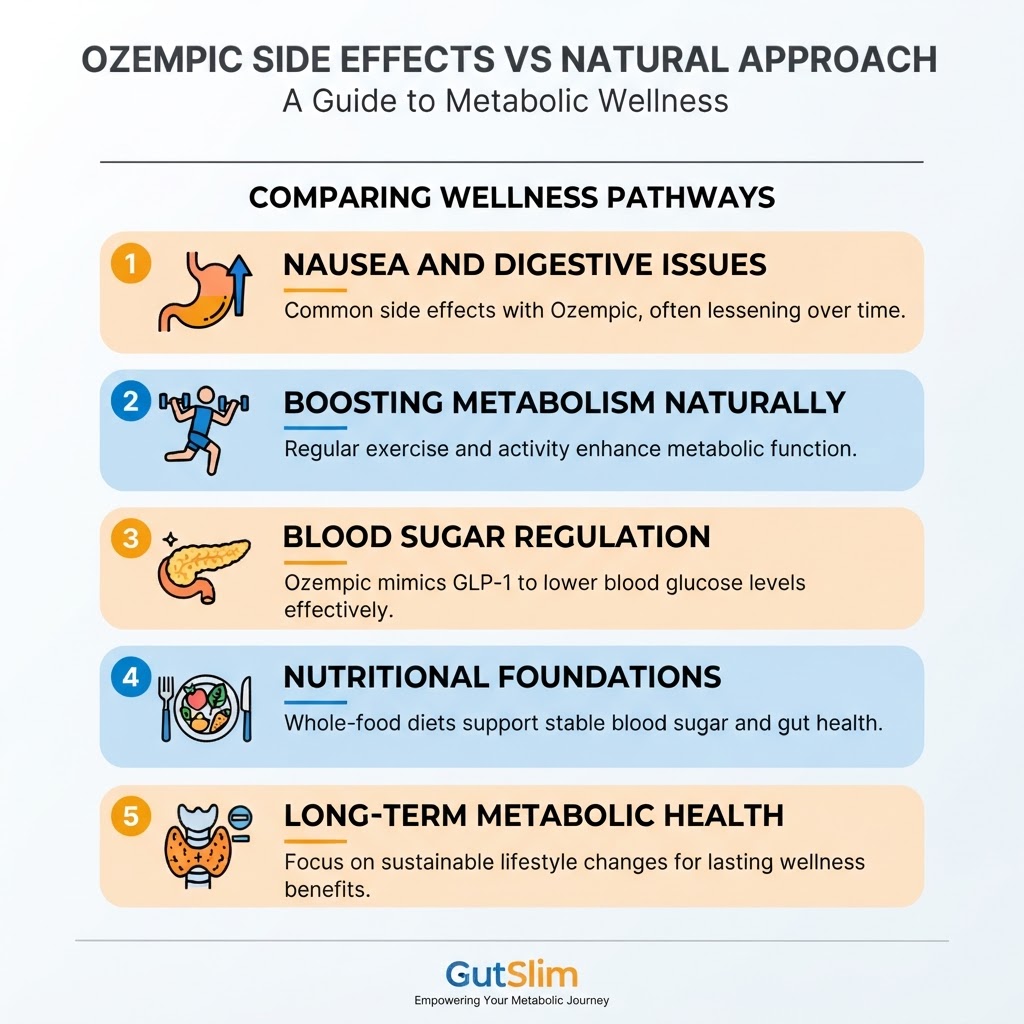
Infographic: ozempic side effects vs natural approach
Managing Cravings and Bloating Naturally
Cravings and bloating are often the most frustrating hurdles on a weight management journey. While GLP-1 medications are sometimes used to suppress appetite, they do not necessarily correct the dysbiosis in the gut that contributes to chronic bloating and erratic hunger. By optimizing your diet to include fermented foods and prebiotics, you can build a more resilient gut lining, which reduces the bloating that often makes people feel heavier than they actually are.
Identifying the Root of Cravings
If you find yourself struggling with persistent sugar cravings, it is often a sign that your microbiome is dominated by sugar-loving bacteria. The goal here is not just to restrict food, but to diversify your microbiome so that your gut bacteria work for you, not against you. A diverse microbiome is better at managing energy extraction from food, which keeps your blood sugar levels stable and prevents the typical afternoon energy crash.
Practical Tactics for Bloating Relief
Bloating is frequently linked to a lack of digestive enzymes or an overgrowth of certain bacteria in the small intestine. Incorporating bitter herbs like dandelion root or apple cider vinegar before meals may help support digestive capacity. Additionally, engaging in mindful eating—chewing food slowly and thoroughly—reduces the amount of air swallowed during meals. These simple behavioral shifts reduce the physical pressure that leads to bloating.
The Role of Fermented Foods
Fermented foods like kimchi, kefir, and sauerkraut act as natural probiotics that stabilize the intestinal environment. By introducing these regularly, you reinforce the good bacteria populations that inhibit the growth of pathogenic microbes. This creates a "crowding out" effect that minimizes the gas production often associated with dysbiosis.
Chronic low-grade inflammation in the gut, often referred to as metabolic endotoxemia, is closely associated with insulin resistance and an altered hormonal response to food intake. — Harvard Health Publishing
The Systematic Path to Metabolic Flexibility
Metabolic flexibility is the ability of your body to switch between burning glucose and burning stored fat. When you rely solely on external hormones, your body may remain in a fixed metabolic state. A natural, gut-focused approach aims to teach your body to become more flexible. This involves regular, movement-based activity and a strategic eating schedule that aligns with your circadian rhythm, further supporting the natural GLP-1 cycle.
Steps Toward Metabolic Optimization
To achieve true metabolic flexibility, you must support your body’s natural rhythms. Consider these daily practices as foundational pillars for your metabolic health:
- Increase your intake of prebiotic foods like onions, garlic, leeks, and bananas daily. These fibers serve as fuel for the bacteria that facilitate natural hormone production.
- Prioritize high-quality, plant-based proteins to support muscle maintenance and blood sugar stability. Muscle tissue is metabolically active and plays a key role in glucose disposal.
- Implement a 12-hour overnight fast to allow the gut time to repair its barrier and reset digestive enzymes. This brief window of rest is critical for reducing systemic inflammation.
- Incorporate fermented foods like kefir, sauerkraut, or miso to introduce beneficial microbes that diversify your gut ecosystem.
- Monitor your body's response to stress, as high levels of cortisol can severely impact your gut-brain axis and inhibit the signaling required for healthy digestion.
The Role of Movement in Satiety
Movement is not just for calorie burning; it is a metabolic signal. A simple, 10-minute walk after a meal can significantly blunt the glucose spike of that meal, reducing the need for an exaggerated insulin response. This, in turn, keeps your hunger hormones in a more balanced state, preventing the "blood sugar rollercoaster" that leads to overeating.
Why Individual Biology Dictates Strategy
Following these steps helps to build a system where your metabolism functions optimally on its own, rather than requiring external, high-impact interventions. Always keep in mind that individual biology is complex, and consulting a healthcare professional is necessary before making significant changes to your lifestyle. No single strategy works for everyone, but creating a foundation of gut health is a universally beneficial starting point.
Integrating GutSlim Support for Your Journey
If you are ready to take the next step in your metabolic journey, focusing on the quality of your internal flora is the most effective starting point. The GutSlim Probiotics GLP-1 Booster is designed specifically to support your body's natural processes by providing targeted probiotic strains that contribute to a healthy gut environment. By supporting your gut, you are creating the best possible conditions for your own hormones to regulate your metabolism as nature intended.
Integrating Supplements as a Catalyst
This is not a quick fix, but a foundation for long-term health. We recommend starting your day by adding one cup of a high-fibre, fermented food source or incorporating our GutSlim booster into your morning routine. Combine this with a 15-minute brisk walk after your evening meal to stimulate healthy digestion and natural GLP-1 production. This small, consistent change acts as a powerful signal to your body that it is time to recalibrate.
Building Long-Term Habits
True metabolic wellness is found in the intersection of thoughtful nutrition, consistent movement, and targeted support. When you focus on these elements, you are not just managing your weight; you are optimizing your entire internal ecosystem. The goal is to cultivate a body that is efficient, resilient, and inherently balanced.
Resources for Your Continued Learning
For more information on our complete range of metabolic support, please visit our collection page. We invite you to subscribe to our newsletter for more science-backed insights into your metabolic wellness journey. By staying informed and focused on gut-centered strategies, you empower yourself to make the best choices for your health and longevity.
Dr. Chomba Chuma
MD & Founder, GutSlim
Dr. Chomba Chuma is a medical doctor and gut health specialist with over a decade of clinical experience. As founder of GutSlim, she is on a mission to help people transform their health through the power of the gut microbiome.
Get gut-smart, one email at a time.
Science made simple, practical tips and member-only offers from GutSlim. No spam, unsubscribe anytime.
Related Articles



Ready to transform your gut health?
Take the free 2-minute Gut Archetype Quiz and discover your personalised protocol.
Take the Free Quiz →