
Natural Alternatives to Ozempic Questions: Supporting Metabolic Health and GLP-1
Dr. Chomba Chuma
MD & Founder, GutSlim
Curious about natural alternatives to Ozempic questions? Discover science-backed strategies to support your GLP-1 and metabolic health naturally today.
Natural Alternatives to Ozempic Questions: Supporting Metabolic Health and GLP-1
As the conversation around metabolic health shifts, many individuals are seeking clarity on natural alternatives to Ozempic questions. With the global focus on GLP-1 hormones, it is natural to wonder if supporting your body from within can influence your weight management journey. At GutSlim, we believe that understanding your internal landscape is the foundational step for any health strategy. While pharmaceutical interventions have their place under strict medical supervision, many people are exploring how targeted nutrition, fiber, and microbiome support might act as gentle, sustainable tools for managing appetite and metabolic balance. This guide provides a science-informed perspective on how these systems interact.
Understanding the Role of GLP-1 in Metabolic Health
The hormone known as glucagon-like peptide-1, or GLP-1, plays a vital role in how your body communicates hunger and satiety. Secreted primarily by the L-cells in your intestines, this hormone signals to the brain that you have consumed enough nutrients, while simultaneously slowing down gastric emptying. When researchers investigate natural alternatives to Ozempic, they are often looking for ways to trigger these same L-cells to increase endogenous hormone production. This is not about replicating a medication, but rather optimizing your biology so your internal signals are clear and consistent.
The Mechanism of Natural Hormone Signaling
Your body is designed to manage energy intake through complex feedback loops. When you consume high-quality fiber, it reaches the lower intestine where it interacts with the L-cells. This interaction is a natural physiological trigger that encourages the body to release its own GLP-1. By focusing on these internal triggers, you may support a sense of fullness that arises from your own biology rather than external chemical inhibition.
Why Internal Optimization Matters
Relying on external interventions can sometimes bypass the body’s innate regulatory feedback loops. By contrast, supporting the natural production of GLP-1 through lifestyle choices fosters a more responsive metabolic system. This creates a state of metabolic flexibility where the body understands when to store energy and when to utilize it. Optimization is about giving your gut the tools it needs to signal satiety effectively and reliably.
Research has shown that specific dietary patterns can influence the secretion of this hormone. For instance, eating a variety of fermentable fibers feeds the beneficial bacteria in your colon, which in turn produce short-chain fatty acids. These metabolites are crucial for signaling the endocrine cells that produce GLP-1. By focusing on the gut-brain axis, you are essentially asking your body to perform its natural duties more efficiently. It is a shift from external intervention to internal optimization, which often yields more sustainable long-term results for many.
The gut microbiome plays a critical role in the regulation of metabolic homeostasis, and specific dietary components can modulate GLP-1 secretion through the production of short-chain fatty acids. — Journal of Clinical Endocrinology & Metabolism, 2022
Nutritional Strategies for Natural GLP-1 Support
If you are evaluating natural alternatives to Ozempic, your plate is your most powerful tool. The goal is to choose foods that provide sustained energy and satiety without spiking blood glucose levels. Prioritizing high-fiber plants is the gold standard for this approach. Fiber acts as a prebiotic, creating the perfect environment for the bacteria that facilitate metabolic communication. You can learn more about the specific foods that influence these pathways in our guide on A Complete List of Foods That Boost GLP-1 Hormone Levels Naturally.
The Fiber-First Approach
Fiber is the primary substrate for your microbiome to create the signaling molecules that influence metabolic health. By increasing your intake of legumes, cruciferous vegetables, and chia seeds, you provide the raw materials for your gut to produce these essential metabolites. Aim to include at least one serving of high-fiber, diverse plant material with every meal to keep your internal signaling constant. This slow, steady intake prevents the "hunger crashes" that often follow refined carbohydrate consumption.
Balancing Macronutrients for Stability
In addition to fiber, the inclusion of lean proteins and healthy fats at every meal helps maintain steady glucose levels. Proteins are highly satiating and trigger their own set of hormonal responses that complement GLP-1 activity. Healthy fats, such as those found in avocados, walnuts, or extra virgin olive oil, slow digestion and ensure that glucose enters the bloodstream at a manageable pace. When your glucose remains stable, your body is less likely to produce extreme hunger signals that lead to overeating.
It is important to recognize that these dietary habits support overall wellness rather than providing an instant fix. By layering these nutritional habits into your daily routine, you create a baseline of stability that can make managing your weight feel less like a struggle and more like a natural rhythm. Consistency is the foundation of long-term metabolic health. Small adjustments to your shopping list often lead to the most significant shifts in how you feel throughout the day.
The Microbiome Connection to Appetite Control
The community of bacteria living in your gut is constantly interacting with your hormonal system. When your gut is balanced, your appetite regulation is generally more accurate. Conversely, dysbiosis, or an imbalance in gut bacteria, may lead to increased cravings and poor metabolic signaling. This is why many experts recommend focusing on Probiotics That Support GLP-1 Production: A Guide to Metabolic Wellness as a way to nurture your internal ecosystem.
Repairing the Gut-Brain Axis
The gut-brain axis is the communication highway that informs your brain about the state of your digestion. If your gut microbiome is populated by beneficial bacteria, these organisms communicate via the vagus nerve and chemical signaling to promote satiety. An imbalanced microbiome might send "noise" instead of clear signals, which can manifest as persistent cravings. Providing your gut with the right probiotic environment is a practical way to quiet this noise.
Practical Steps for Microbiome Health
To nurture this ecosystem, consider incorporating fermented foods like kimchi, sauerkraut, or kefir into your daily diet. These foods introduce live, active cultures that support the diversity of your intestinal flora. If you choose to use a probiotic supplement, look for strains that have been researched for their influence on metabolic markers. Always consult with your doctor before making significant changes to your supplement routine, especially if you are currently using other medications.
Research suggests that specific probiotic strains may help maintain the integrity of the gut lining. A healthy gut lining ensures that nutrients are absorbed properly and that your body avoids the inflammatory triggers that can disrupt metabolic function. Managing your weight through the gut requires patience and a consistent approach to microbial health. While these strategies do not work like a medication, they provide the biological support your body needs to communicate effectively.
Evidence suggests that alterations in the gut microbiome are associated with metabolic syndrome, and probiotic supplementation may support improved markers of insulin sensitivity and weight management. — Nature Reviews Endocrinology, 2021
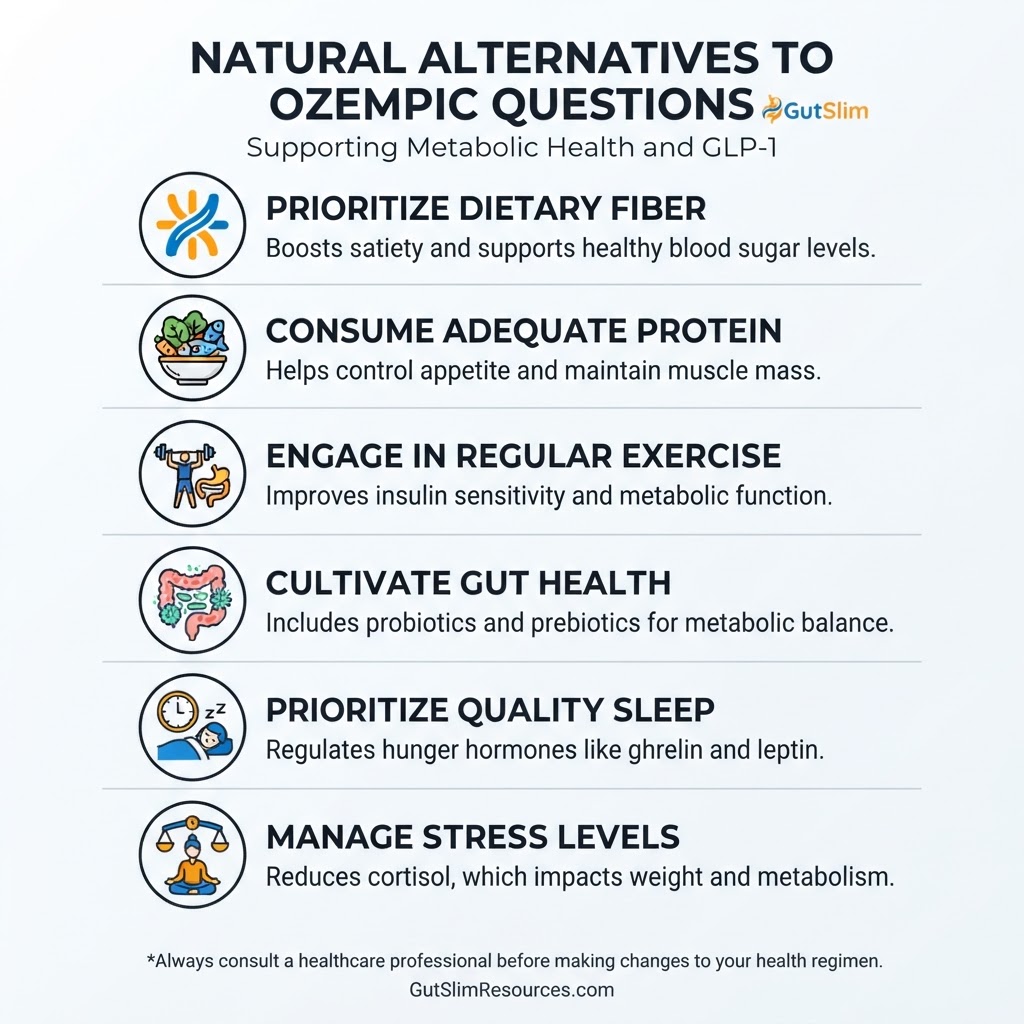
Infographic: natural alternatives to ozempic questions
Lifestyle Habits That Enhance Metabolic Signals
Beyond nutrition, your daily movements and recovery habits play an enormous role in how your metabolism functions. Exercise, particularly resistance training, helps your muscles become more insulin-sensitive, which reduces the load on your pancreas and stabilizes your blood glucose. When you move consistently, you improve the transit time of food through your digestive tract, which is another factor in how efficiently your GLP-1 system operates. For those interested in deeper learning on how to optimize your body, research indicates the importance of maintaining a diverse range of botanical intake, as detailed by the National Institutes of Health at https://www.ncbi.nlm.nih.gov/pmc/articles/PMC8752164/.
The Role of Resistance Training
Muscles are metabolic powerhouses. By engaging in resistance training—such as lifting weights, bodyweight exercises, or using resistance bands—you increase your body’s ability to store and process glucose. This reduces the spikes in blood sugar that can lead to insulin resistance over time. Even 20 minutes of movement a few times a week can significantly improve your metabolic resilience and sensitivity.
Optimizing Daily Movement
You do not need to spend hours at the gym to see metabolic benefits. Incorporating "movement snacks"—like taking a brisk walk after your main meal—helps to shuttle glucose into the muscles immediately after eating. This simple habit mimics the way your body is evolutionarily designed to use energy post-meal. It effectively supports your insulin response and helps prevent the blood sugar rollercoasters that disrupt hunger signaling.
Sleep is the final pillar of this triad. When you are chronically sleep-deprived, your hunger hormones, specifically ghrelin and leptin, become dysregulated. This often results in increased cravings for processed sugars and refined carbohydrates. By prioritizing quality sleep and structured movement, you are essentially lowering the noise in your system, allowing your body to hear the signals of satiety more clearly. Think of these habits as the scaffolding upon which your metabolic health is built.
Navigating Expectations and Sustainable Weight Management
It is common to feel overwhelmed by the abundance of information regarding weight management. When searching for natural alternatives to Ozempic, keep in mind that true metabolic support is rarely found in a single pill or quick fix. It is the sum of your daily choices—what you eat, how you move, and how you care for your gut. Sustainable progress in weight management is associated with slow, consistent changes that you can maintain for years, not weeks. Avoid the temptation to seek out extreme restrictive diets, as these often increase stress on the body and may hinder your progress.
Managing Expectations for Long-Term Success
Metabolic health is a journey, not a sprint. When you adopt natural strategies, you are rebuilding biological functions that may have been under-supported for years. It is perfectly normal for results to take weeks or months to manifest in a noticeable way. Patience is an essential component of this process, as you are allowing your body to recalibrate its internal thermostat.
Cultivating Non-Scale Victories
Weight management is often measured by the scale, but metabolic health manifests in many other ways. Pay attention to your energy levels throughout the afternoon, the quality of your sleep, and the clarity of your digestion. These are functional markers of metabolic health that indicate your body is moving in the right direction. When you focus on these indicators, you create a positive feedback loop that encourages you to continue your habits.
We encourage you to document your progress and focus on non-scale victories, such as improved energy levels, better digestion, and reduced cravings. If you find yourself struggling with your current routine, it may be time to revisit your habits and look for ways to simplify your approach. For professional guidance on navigating these lifestyle changes, remember that a medical professional is your best resource. They can help you interpret your personal markers and determine which strategies are most appropriate for your unique biology. For more reading on metabolic flexibility, visit the https://www.who.int/ website for general health guidelines on balanced nutrition.
Your First Step Toward Metabolic Wellness
If you are ready to begin supporting your metabolic health, start with one simple change today. The most effective step is to introduce a high-quality, targeted probiotic supplement that supports your internal ecosystem and digestive comfort. Adding the GutSlim Probiotics GLP-1 Booster to your morning routine is a practical way to provide your gut with the support it needs. By nurturing your microbiome, you are investing in the foundation of your metabolic health. Consistency is the key to seeing results, so pair this with a 10-minute walk after dinner to further support your glucose metabolism. You can explore our full range of wellness solutions at https://www.velobiotics.com/collections/gutslim. We invite you to sign up for our weekly newsletter for more science-backed tips on gut health and metabolic wellness.
Dr. Chomba Chuma
MD & Founder, GutSlim
Dr. Chomba Chuma is a medical doctor and gut health specialist with over a decade of clinical experience. As founder of GutSlim, she is on a mission to help people transform their health through the power of the gut microbiome.
Get gut-smart, one email at a time.
Science made simple, practical tips and member-only offers from GutSlim. No spam, unsubscribe anytime.
Related Articles



Ready to transform your gut health?
Take the free 2-minute Gut Archetype Quiz and discover your personalised protocol.
Take the Free Quiz →