
How To Maintain Weight Loss Long Term Through Gut Health Support
Dr. Chomba Chuma
MD & Founder, GutSlim
Discover sustainable strategies for how to maintain weight loss long term by focusing on gut health, metabolic balance, and daily habits. Start your journey tod
Achieving your initial weight management goals is a commendable milestone, but many find that the subsequent phase of consistency presents a different set of challenges. Learning how to maintain weight loss long term is less about rigid restriction and more about fostering a metabolic environment that works in your favor. By shifting your focus toward the health of your microbiome, you can support your body's natural appetite regulation and energy usage for years to come. This article explores science-backed strategies for sustaining your progress while nurturing your internal ecosystem.
The Role of Metabolic Flexibility in Maintenance
Metabolic flexibility describes your body's ability to switch efficiently between burning carbohydrates and fats for fuel. When your gut microbiome is diverse and thriving, it produces short-chain fatty acids (SCFAs) that influence how your cells manage energy. If you have previously navigated the complexities of mastering metabolic flexibility, you likely understand that a stable gut is the foundation for this adaptability. To maintain your progress, prioritize foods that provide diverse microbial fuel, such as complex carbohydrates and fermented sources.
Defining Metabolic Adaptability
At its core, metabolic flexibility is the body’s "gear-shifting" capability. Someone with high metabolic flexibility can easily switch to fat oxidation during periods of low activity or fasting. Conversely, they can utilize glucose efficiently during high-intensity exercise. A healthy gut microbiome provides the biochemical signaling necessary to keep this system responsive.
The Influence of Short-Chain Fatty Acids
When your gut bacteria ferment prebiotic fibers, they produce SCFAs like butyrate, acetate, and propionate. These compounds act as signaling molecules that inform your metabolism about current energy availability. They may help improve insulin sensitivity, which is crucial for maintaining weight stability over time. By providing your bacteria with varied fibers, you keep this chemical messaging system robust.
Practical Steps for Metabolic Resilience
To foster this flexibility, avoid prolonged periods of extreme dietary restriction, which can cause your metabolism to become sluggish. Instead, focus on "metabolic cycling," where you consume a wide range of colorful, whole-food plant sources. This provides a steady supply of fiber, which helps your bacteria produce the SCFAs needed for fuel management. Simple swaps, like choosing sweet potatoes over white bread, provide the steady, complex energy your microbiome thrives on.
Maintaining a stable metabolism requires consistent input of varied prebiotic fibres. Research suggests that a lack of microbial diversity can lead to metabolic sluggishness, making it harder to sustain results. By keeping your gut bacteria fed with diverse fibres, you support the chemical signaling pathways that keep your metabolism responsive. This is not about strict dieting, but rather about choosing nutrient-dense options that feed your internal allies.
The composition of the human gut microbiota is associated with the regulation of energy homeostasis and metabolic health, suggesting that microbiome interventions may be useful for long-term weight management. — Bäckhed et al., 2004, Proceedings of the National Academy of Sciences (https://pubmed.ncbi.nlm.nih.gov/15509761/)
Supporting Natural GLP-1 Levels for Appetite Control
Glucagon-like peptide-1 (GLP-1) is a critical hormone that signals fullness to the brain and supports healthy blood sugar levels. Many people who reach their goal weight find that their natural production of this hormone tends to fluctuate, leading to a return of cravings. As explored in our guide on how to increase GLP-1 naturally with food for better metabolism, specific dietary choices can stimulate your body to maintain its own production of these signals. Supporting your gut lining is essential to ensure these hormonal pathways remain sensitive.
How Gut Bacteria Influence Satiety Signals
The enteroendocrine cells in your gut are responsible for secreting GLP-1. These cells rely on the presence of specific metabolites produced by your microbiome to initiate this release. When the gut lining is healthy, these signals travel more efficiently to the brain. This natural feedback loop may help reduce the frequency of hunger spikes throughout the day.
The Role of Protein and Healthy Fats
To keep your appetite managed without medical intervention, consider incorporating more high-quality protein and healthy fats into your meals. These macronutrients have been shown to trigger a more robust release of satiety hormones compared to simple sugars. For instance, pairing an avocado with a serving of lean protein can provide a lasting sense of fullness. These foods work with your microbiome to sustain chemical signals that dampen excessive hunger.
Maintaining Gut Barrier Integrity
Furthermore, a healthy gut barrier prevents the low-grade inflammation that often interferes with hormonal signaling. When the gut lining experiences "leaky" characteristics, it can disrupt the way your body perceives fullness. By prioritizing gut integrity through prebiotic fibers and probiotic-rich foods, you allow your body to naturally regulate its intake requirements. Focus on hydration and the consumption of bone broths or fermented vegetables to support the mucosal lining of the digestive tract.
Why Fibre Is Your Long-Term Maintenance Partner
Fibre is often misunderstood as merely a digestive aid, but it is the primary engine for gut-derived metabolic health. As we detailed in our analysis on why fibre matters for weight loss and sustainable metabolic health, the fermentation of fibre by gut bacteria produces metabolites that influence fat storage and satiety. If you want to know how to maintain weight loss long term, you must look at your daily fibre intake as a non-negative metric for success.
The Diversity Principle
Aiming for thirty different plants per week is an excellent target to ensure a wide spectrum of prebiotic compounds reach your colon. This diversity fosters a resilient microbiome that can handle occasional dietary deviations without causing significant metabolic shifts. Try adding a new seed, herb, or vegetable to your shopping list each week to expand your microbiome’s potential. Variety is the key to preventing the "monoculture" effect that can lead to digestive stagnation.
Building a Resilient Microbiome
When your microbial community is robust, it acts as a buffer against cravings and helps maintain consistent energy levels throughout the day. A diverse population of bacteria is better equipped to manage the caloric content of your meals efficiently. Remember that increasing fibre intake should be a gradual process to allow your digestive system to adapt comfortably. Start by adding small portions of beans, legumes, or cruciferous vegetables to your lunch.
Strategies for Gradual Increase
If you are currently consuming low levels of fiber, start by increasing your intake by 5 grams every few days. Pairing this increase with plenty of water is essential for optimal transit time. Consider incorporating chia seeds, flaxseeds, or psyllium husk into smoothies or morning porridge. These small additions provide the bulk and prebiotic substrate needed to keep your internal ecosystem flourishing.
Increased dietary fibre intake is associated with improved satiety and long-term weight regulation, likely due to the fermentation of these fibres by colonic microbiota into beneficial short-chain fatty acids. — Slavin, 2005, Nutrition (https://pubmed.ncbi.nlm.nih.gov/15797686/)
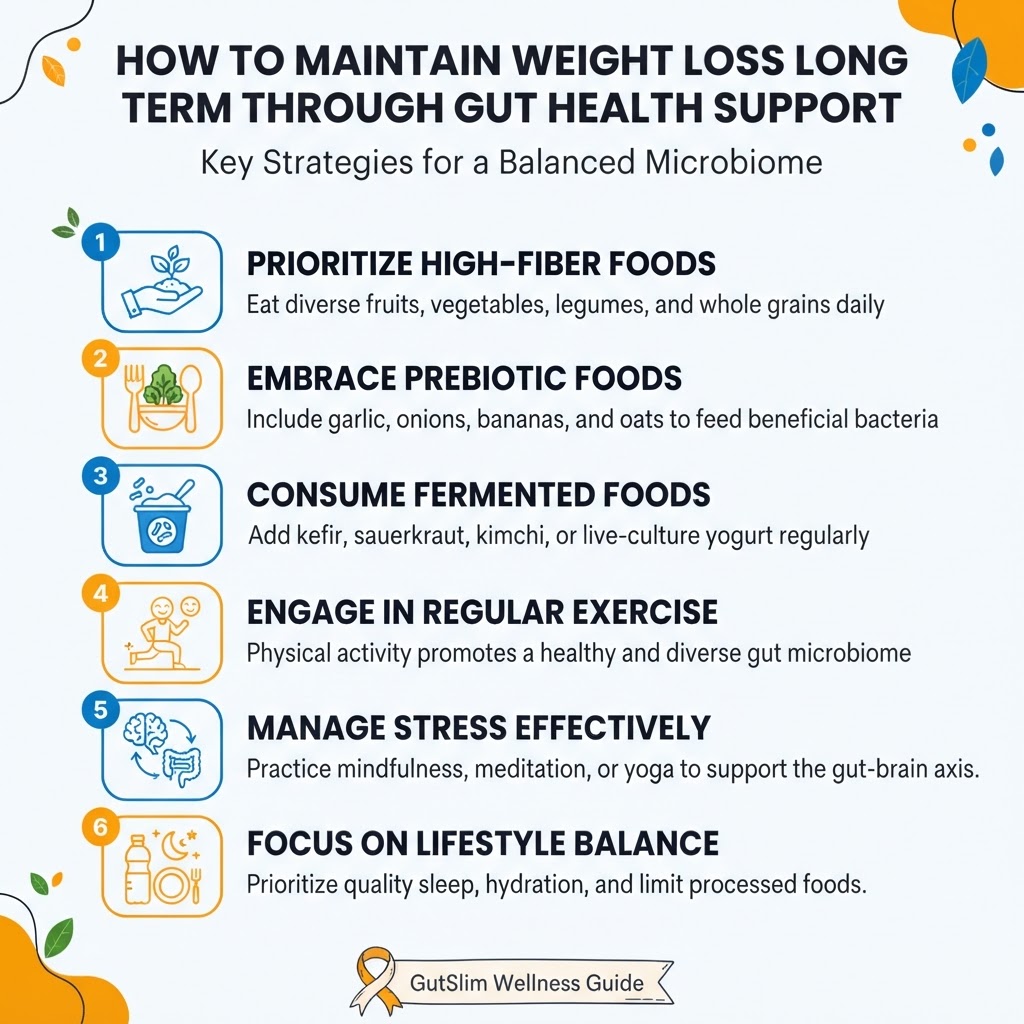
Infographic: how to maintain weight loss long term
The Impact of Lifestyle Habits on Metabolic Stability
Weight maintenance is not purely about food choices; it is equally dependent on how you manage the external stressors that influence your internal biology. Chronic stress is known to alter the gut microbiome and increase the production of cortisol, a hormone that can promote the storage of visceral fat. When you are under constant pressure, your gut lining may become compromised, leading to systemic inflammation that disrupts your metabolic processes. Establishing a routine that includes mindful movement and quality sleep is vital for your long-term wellness.
Stress Management and Microbial Balance
High cortisol levels create a ripple effect that can reduce the number of beneficial bacteria in your gut. Techniques like deep breathing, meditation, or even a brief walk in nature can help signal to your nervous system that you are safe. When the nervous system is in a "rest and digest" state, your digestive system functions at its peak. This state is essential for proper nutrient absorption and the effective secretion of metabolic hormones.
Movement as Metabolic Support
Incorporate movement that you enjoy, rather than viewing exercise as a penalty for eating. Regular, moderate activity supports insulin sensitivity and helps keep your microbiome diverse and active. Research published by the Harvard T.H. Chan School of Public Health emphasizes that even moderate physical activity can significantly improve metabolic outcomes and reduce the risk of long-term weight regain (https://www.hsph.harvard.edu/nutritionsource/healthy-weight/). Try activities like restorative yoga, walking, or light swimming to encourage metabolic health without adding extra physiological stress.
The Role of Sleep Hygiene
Prioritizing rest also allows your digestive system to reset, which is critical for hormonal balance. Poor sleep quality is often associated with increased ghrelin (the hunger hormone) and decreased leptin (the satiety hormone). Establishing a consistent bedtime ritual supports your body’s natural circadian rhythm, which in turn regulates gut motility. Aim for seven to nine hours of quality sleep to ensure your metabolic and hormonal processes remain stable.
Practical Steps for Daily Maintenance Success
Maintaining your weight is a series of daily choices rather than a singular event. Here are several practical strategies to incorporate into your life:
- Prioritize fermented foods: Include daily servings of kimchi, sauerkraut, or kefir to provide fresh, live microbial support to your gut.
- Practice mindful eating: Eat slowly and without distractions to allow your satiety signals sufficient time to reach your brain.
- Optimize hydration: Drink adequate water to support the transit of fibre and the general health of your mucosal lining.
- Minimize ultra-processed intake: Limit foods high in refined sugars and artificial additives, which can contribute to gut inflammation and dysbiosis.
- Keep a journal: Track your meals periodically to identify hidden triggers for cravings or symptoms of digestive discomfort.
Monitoring and Adjusting
By following these steps, you create an environment where your body naturally resists the urge to store excess energy. It is also important to consult with a healthcare professional before making significant changes to your routine, as they can provide guidance tailored to your specific metabolic profile. Regular monitoring of your progress can help you catch small deviations before they become trends. If you notice a change in your energy levels or appetite, use your food journal to reflect on your recent fiber intake and stress levels.
A Simple First Step for Your Journey
If you are wondering how to begin your maintenance phase today, the simplest step is to add one serving of a high-fibre, probiotic-rich food to your evening meal. Perhaps enjoy a small side of raw sauerkraut or a sprinkle of flaxseeds over a salad to feed your beneficial bacteria. Supporting your gut health provides the biological support you need to maintain your progress with greater ease and consistency.
For those looking for extra support, consider exploring our GutSlim Probiotics GLP-1 Booster to enhance your natural metabolic processes. By consistently nurturing your gut, you are investing in your future health and wellbeing. We invite you to join our community by subscribing to the GutSlim newsletter for more tips on sustainable metabolic management. Your journey toward long-term maintenance is a marathon, not a sprint, and every small action contributes to your lasting success.
Dr. Chomba Chuma
MD & Founder, GutSlim
Dr. Chomba Chuma is a medical doctor and gut health specialist with over a decade of clinical experience. As founder of GutSlim, she is on a mission to help people transform their health through the power of the gut microbiome.
Get gut-smart, one email at a time.
Science made simple, practical tips and member-only offers from GutSlim. No spam, unsubscribe anytime.
Related Articles



Ready to transform your gut health?
Take the free 2-minute Gut Archetype Quiz and discover your personalised protocol.
Take the Free Quiz →