
Natural Ways to Increase GLP-1 Hormone for Appetite Control & Weight Management
Dr. Chomba Chuma
MD & Founder, GutSlim
Discover natural strategies to boost GLP-1 hormone for better appetite control and support your weight management journey.
In our pursuit of balanced well-being and effective weight management, we often explore various avenues, from diet and exercise to supplements. Yet, a critical player in our body's intricate systems, the gut hormone GLP-1, often remains overlooked. GLP-1, or glucagon-like peptide-1, plays a significant role in regulating appetite, blood sugar levels, and even energy expenditure. Understanding natural ways to increase GLP-1 hormone for appetite control can be a game-changer for those looking to achieve sustainable weight management and a healthier gut. This article delves into how lifestyle and dietary choices can naturally support your body's own GLP-1 production, offering a holistic approach to wellness.
Understanding the Role of GLP-1 in Your Body
Glucagon-like peptide-1 (GLP-1) is an incretin hormone primarily produced by specialized cells in your intestines, called L-cells, in response to food intake. Its primary functions are multifaceted, significantly impacting how we feel full, how our body processes glucose, and our overall metabolic health. When you eat, especially foods containing carbohydrates and fats, your L-cells are stimulated to release GLP-1 into your bloodstream.
Once released, GLP-1 travels to various parts of the body, including the brain, pancreas, and stomach. In the brain, it signals satiety, helping you feel fuller for longer, which is crucial for managing food intake and reducing cravings. It also slows down gastric emptying, meaning food stays in your stomach for a longer period, further contributing to feelings of fullness. Furthermore, GLP-1 enhances insulin secretion from the pancreas when blood sugar levels are high and suppresses glucagon release, helping to maintain stable blood glucose levels. This dual action makes it a powerful hormone for both appetite control and metabolic regulation.
"GLP-1 receptor agonists are a class of medications used to treat type 2 diabetes and obesity by mimicking the effects of the natural incretin hormone GLP-1." — National Institute of Diabetes and Digestive and Kidney Diseases (NIDDK)
While pharmaceutical interventions that mimic GLP-1 have gained popularity, it's vital to remember that our bodies are remarkably adept at producing this hormone naturally. The key lies in understanding the triggers and lifestyle factors that can optimize its production and effectiveness. Focusing on these natural methods allows us to harness our internal systems for enhanced appetite control and weight management, working in harmony with our body's inherent wisdom. This approach aligns perfectly with the GutSlim philosophy of supporting your body's natural processes for long-term health and vitality.
The Gut-Brain Axis and GLP-1 Production
The intricate connection between your gut and your brain, known as the gut-brain axis, is central to many of our bodily functions, including appetite regulation and mood. Your gut microbiome, the vast community of bacteria, viruses, and fungi residing in your digestive tract, plays a pivotal role in this communication. A healthy and diverse microbiome can significantly influence the production and signaling of gut hormones like GLP-1.
Certain gut bacteria have been shown to directly interact with the L-cells in your intestines, stimulating them to release GLP-1. Conversely, an imbalanced gut microbiome, often referred to as dysbiosis, can disrupt these signals, leading to reduced GLP-1 production and impaired appetite control. This is why nurturing your gut health is not just about digestion; it's fundamentally linked to your hormonal balance and weight management efforts.
When your gut is healthy, it functions as a powerful endocrine organ, communicating effectively with your brain. This communication helps regulate hunger signals, satiety cues, and even cravings for certain foods. A thriving gut environment supports the production of beneficial metabolites that can further enhance GLP-1 activity. This underscores the importance of a holistic approach, where supporting your gut microbiome is a cornerstone of achieving natural appetite control.
Dietary Strategies to Naturally Boost GLP-1
Your diet is arguably the most direct and powerful lever you have for influencing GLP-1 production. The types of food you consume, their nutrient composition, and how they are prepared can all play a role. Focusing on whole, unprocessed foods rich in specific nutrients can help stimulate your L-cells and support optimal GLP-1 release.
1. Soluble Fibre: A Key Player
Soluble fibre, found in foods like oats, barley, psyllium husk, beans, lentils, apples, and citrus fruits, is a superstar for GLP-1 production. When consumed, soluble fibre ferments in the large intestine, producing short-chain fatty acids (SCFAs) such as butyrate. These SCFAs act as signaling molecules that can stimulate L-cells to increase GLP-1 secretion. Aim to incorporate a variety of fibre-rich foods into your daily meals. Remember, the recommended intake is around 25-30 grams per day, but it's best to increase intake gradually to avoid digestive discomfort.
2. Protein Power
Protein is another potent stimulator of GLP-1 release. Consuming adequate protein at each meal signals to your body that you've ingested a nutrient-rich source of energy and building blocks. This, in turn, promotes satiety and can help reduce overall food intake. Excellent sources include lean meats, poultry, fish, eggs, dairy products, legumes, and plant-based protein powders. Including a protein source with every meal can help manage hunger pangs throughout the day.
3. Healthy Fats
Certain healthy fats, particularly monounsaturated and polyunsaturated fats found in avocados, nuts, seeds, and olive oil, can also contribute to GLP-1 release. These fats help slow down gastric emptying, prolonging the feeling of fullness. They also play a crucial role in nutrient absorption and overall metabolic health. However, as with all fats, moderation is key due to their calorie density.
4. Fermented Foods for Gut Health
As we've discussed the importance of the gut microbiome, it's worth reiterating the role of fermented foods. Foods like kimchi, sauerkraut, and kefir are rich in probiotics, the beneficial bacteria that populate your gut. A healthy gut environment fostered by these foods can indirectly support better GLP-1 signaling and production. These foods not only provide beneficial bacteria but also contain compounds that can support gut lining integrity.
5. Strategic Carbohydrate Choices
While carbohydrates stimulate GLP-1, the type of carbohydrate matters. Opt for complex carbohydrates found in whole grains, vegetables, and legumes over refined sugars and simple carbohydrates. Complex carbs are digested more slowly, leading to a more sustained release of GLP-1 and avoiding sharp spikes and crashes in blood sugar, which can often lead to increased hunger and cravings.
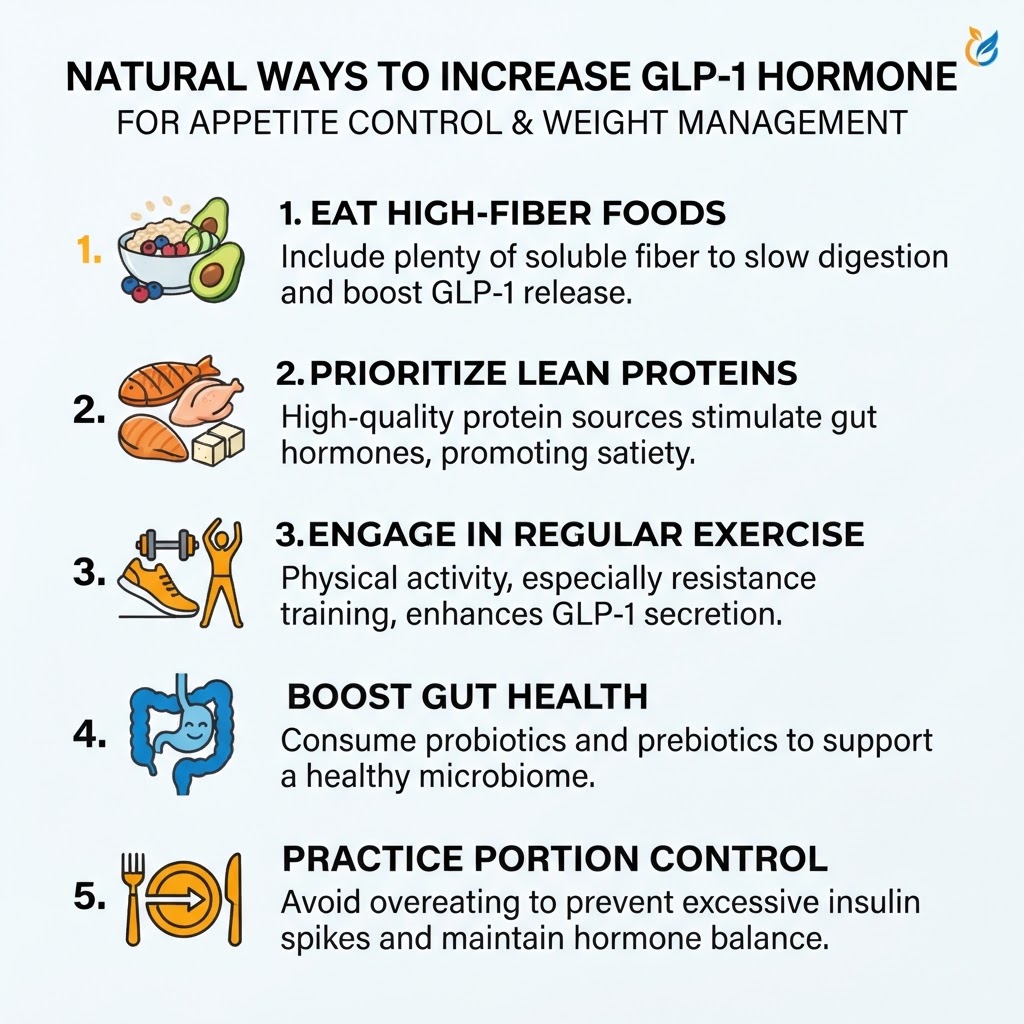
Infographic: natural ways to increase glp-1 hormone for appetite control
Lifestyle Factors Influencing GLP-1
Beyond diet, several lifestyle factors can influence your body's natural GLP-1 production and effectiveness. These elements work synergistically with dietary choices to create a robust environment for appetite regulation and metabolic health.
1. Regular Physical Activity
Exercise is a well-established modulator of numerous hormones, and GLP-1 is no exception. Engaging in regular physical activity, particularly a combination of aerobic exercise and resistance training, has been shown to increase GLP-1 levels. Exercise not only helps improve insulin sensitivity but also positively impacts the gut microbiome and can enhance the body's response to GLP-1. Even moderate activity, such as brisk walking, can make a difference. Consider incorporating a short walk after meals to potentially boost GLP-1 and aid digestion.
2. Quality Sleep
Poor sleep quality or insufficient sleep can disrupt hormonal balance throughout the body, including hormones involved in appetite regulation. Studies suggest that sleep deprivation can lead to increased hunger by affecting hormones like ghrelin (the hunger hormone) and leptin (the satiety hormone). While the direct link to GLP-1 is still being explored, maintaining a consistent sleep schedule and aiming for 7-9 hours of quality sleep per night is crucial for overall hormonal harmony and effective appetite control. This aligns with our understanding of how better sleep can support gut health.
3. Stress Management
Chronic stress can have a profound negative impact on your gut health and, consequently, your hormonal balance. The stress hormone cortisol can disrupt the gut microbiome and interfere with the production and signaling of various hormones, potentially affecting GLP-1. Implementing stress-reducing techniques such as mindfulness, meditation, deep breathing exercises, or spending time in nature can help mitigate these effects. Prioritizing mental well-being is an integral part of supporting your physical health and metabolic functions.
The GutSlim Approach: Supporting Your Natural GLP-1
At GutSlim, we believe in empowering you to work with your body's natural systems for effective weight management and improved gut health. While pharmaceutical interventions exist, we champion a holistic, science-backed approach that focuses on optimizing your body's inherent capabilities. This means focusing on diet, lifestyle, and targeted support for your gut microbiome.
Our philosophy is rooted in the understanding that a healthy gut is the foundation for overall well-being. By supporting a balanced gut environment, we can enhance the production of crucial hormones like GLP-1, which are essential for appetite control and metabolic health. We advocate for whole foods, mindful eating, and lifestyle habits that promote hormonal balance and reduce inflammation.
We recognize that sometimes, providing additional targeted support can be beneficial. This is where our range of GutSlim probiotics comes into play. Formulated with carefully selected strains, these probiotics are designed to support gut barrier function, promote a diverse microbiome, and ultimately contribute to the optimal environment needed for natural GLP-1 production. They are a complementary tool to your dietary and lifestyle efforts, offering a more comprehensive path to achieving your health goals.
Considerations and When to Seek Professional Advice
While natural methods for increasing GLP-1 hormone production are highly beneficial, it's essential to approach health and wellness with a personalized perspective. What works optimally for one individual may need adjustments for another, based on unique physiology, dietary habits, and underlying health conditions.
It is always advisable to consult with a qualified healthcare professional or a registered dietitian before making significant changes to your diet or introducing new supplements, especially if you have pre-existing health conditions or are taking medications. They can provide tailored advice and ensure that your chosen strategies are safe and appropriate for your specific needs. For instance, if you are considering probiotic supplements, a professional can help you select the most suitable strains and dosages.
Furthermore, understanding your body's signals is key. While these natural strategies may help improve appetite control and support weight management efforts, they are part of a broader wellness picture. They work best when integrated into a balanced lifestyle that includes a nutritious diet, regular physical activity, adequate sleep, and stress management. Remember, sustainable health is a journey, not a destination, and seeking guidance along the way ensures you are on the most effective and healthy path.
Exploring Probiotic Support for GLP-1
Given the profound link between the gut microbiome and GLP-1 production, exploring targeted probiotic supplementation can be a strategic step in optimizing your body's natural hormone function. Probiotics are live microorganisms that, when administered in adequate amounts, confer a health benefit on the host. Certain probiotic strains have demonstrated the potential to influence GLP-1 secretion and improve metabolic health indicators.
Research has indicated that specific bacterial species, such as certain strains of Lactobacillus and Bifidobacterium, may play a role in stimulating L-cells to produce GLP-1. These beneficial bacteria can thrive in the gut environment, contributing to a healthier microbiome overall. A more balanced and diverse gut flora can lead to improved gut barrier function and enhanced communication along the gut-brain axis, indirectly supporting optimal GLP-1 signaling.
When selecting a probiotic, it's important to consider products that are formulated with well-researched strains known for their potential impact on gut health and metabolic processes. Factors such as the viability of the cultures, the CFU count (colony-forming units), and the specific strains included are crucial. Opting for high-quality probiotics can complement dietary efforts and provide an additional layer of support for those looking to naturally enhance their GLP-1 levels for appetite control and weight management. This is precisely why we developed the GutSlim Probiotics GLP-1 Booster, which contains specific strains chosen for their potential to support gut health and hormonal balance.
The Simple First Step: Integrating Fiber-Rich Foods
Embarking on a journey to naturally boost your GLP-1 hormone levels for better appetite control doesn't require drastic overhauls. The simplest, most impactful first step you can take today is to consciously increase your intake of soluble fibre. Start by adding just one extra serving of a high-fibre food to your daily routine. This could be a bowl of oats for breakfast, a handful of berries with your yogurt, adding lentils or beans to your soup or salad, or incorporating psyllium husk into your morning smoothie.
Focusing on this single, actionable step makes the process manageable and builds momentum for further positive changes. As you successfully integrate more fibre, you'll naturally begin to notice improvements in satiety and a potential reduction in cravings. This foundational step supports your gut microbiome, which in turn aids in the natural production of GLP-1, contributing to more effective appetite control and supporting your weight management goals. To further support your gut health and metabolic wellness journey, explore our range of GutSlim products designed to complement your efforts: Shop GutSlim Collections.
We invite you to subscribe to the GutSlim newsletter for more science-backed insights and practical tips on achieving optimal gut health and weight management.
Dr. Chomba Chuma
MD & Founder, GutSlim
Dr. Chomba Chuma is a medical doctor and gut health specialist with over a decade of clinical experience. As founder of GutSlim, she is on a mission to help people transform their health through the power of the gut microbiome.
Get gut-smart, one email at a time.
Science made simple, practical tips and member-only offers from GutSlim. No spam, unsubscribe anytime.
Related Articles
Ready to transform your gut health?
Take the free 2-minute Gut Archetype Quiz and discover your personalised protocol.
Take the Free Quiz →